AI advisory & implementation

AI that moves the P&L.

We start with how your business actually works. Then we build the AI that fits it, and stay until your team can run it without us.

The outside set

Everyone is paddling. Fewer are in position.

In surfing, the outside set breaks further out. Most people miss it because they are sitting inside, taking whatever comes through.

AI is the same. The frontier throws off a new model every week, and almost none of it will move your business this quarter.

The work is choosing which wave you want, then being in the right place when it arrives.

Who we work with

Companies early in their AI journey.

Mid-market businesses with lean management teams, a lot of operating knowledge held informally, and systems built to run the business rather than to report on it. Most arrive in one of two places.

They haven’t started

No first move, no owner

No obvious place to begin, nobody who owns it, and a reasonable fear of spending real money on something that won’t stick.

They’ve tried something

Still looking for repeatable ROI

A pilot, a tool, a vendor. People used it for a month, nothing showed up in the numbers, and now there is fatigue and a quiet assumption that AI is overhyped.

Both lead to the same question: which use case is worth building, and is the data there to support it?

Most AI investment isn’t paying off

Spending is up. Returns mostly are not.

7%

of leaders report having established ROI from AI

61%

of CEOs say their board is rushing AI transformation

11%

of CEOs say AI’s impact is linked to financial reporting and reviewed regularly

Across the research the blockers are consistent, and they are rarely talent or technology. They are integration, adoption, and measurement.

The companies getting a return tend to be the ones keeping score. KPMG found organizations with full visibility into their AI operating costs were five times more likely to report established ROI, 15% against 3%.

Sources: KPMG Global AI Pulse, Q2 2026 (fielded April–May 2026; 2,145 senior leaders, 20 markets) · BCG, Split Decisions: The BCG CEOs and Boards Survey (published May 2026; 625 leaders, including 351 CEOs and 274 board members, at companies with $100M+ annual revenue) · EY CEO Outlook (fielded March–April 2026; 1,200 CEOs, 21 countries). Self-reported executive survey data.

Why the usual options stall

Three familiar options, each with a predictable weakness.

We built OutsideSet because none of them brings both halves: the judgment to choose the right problem and the ability to build the answer.

The big consulting firm

Strategy houses and global integrators

Strong on the thesis, thin on delivery. The team that sold you isn’t the team that shows up, and the economics rarely pencil for a company your size. You get frameworks; you don’t get working software.

The dev shop

Boutique AI firms, offshore teams, freelancers

They build exactly what you spec. The hard part is knowing what to spec, and no one on that side is measuring whether it moved a number the business cares about.

The vendor channel

Platform partners and preferred suppliers

Advice that comes bundled with a stack. The recommendation is shaped by what the provider sells, which means model lock-in and vendor lock-in before you’ve proven anything.

We sit in the middle: consulting rigor and hands-on build in one senior team, where the people who sell the work are the people who do it.

How we work

Diagnose. Build. Run.

Each stage is gated, so you proceed when ready. We never ask for a large commitment up front.

01

Diagnose

2–3 weeks · fixed fee

We map where AI can move your numbers, size it in dollars, and read your real conditions: data, systems, processes, and people. You end with a ranked roadmap and an honest go / no-go.

02

Build

6–12 weeks · fixed or value-based

We build the highest-impact use case and put it into production on live data, used by real people, instrumented against a metric you already track. Senior builders, constrained scope, working software.

03

Run

Ongoing · monthly

Anything deployed decays. Accuracy drifts, systems change, models move monthly. We monitor, tune, and extend what we built, and report performance against the metric it was built to move.

We agree on the metric. We choose the operating metric that matters, and ensure it’s instrumented. It is measured the same way at the end as it was at the start, so the result is readable either way. Without that, everyone has an opinion about whether the work landed and nobody can settle it.

We work at a pace the organization can absorb. Adoption is usually what decides whether the work shows up in the numbers, and change that outruns the people doing it tends to get dropped. Some teams want us to lead and build fluency from the ground up. Others want a partner in the trenches. Either way, the test we hold ourselves to is whether it is still running after we go.

How we read readiness

Twelve building blocks to AI readiness, across four categories.

Together they show where an organization can move and where it is likely to get stuck. Most AI programs stall on a block nobody assessed.

01

Business direction

Whether AI is tied to strategy, has a clear mandate from leadership, and points at a value pool worth chasing.

02

Organization

Whether business leaders own the outcome, and whether the company can absorb changes to workflows, roles, and incentives.

03

Technology and controls

Whether the data is accessible and usable, the systems connect where work happens, and risk can be managed without stopping progress.

04

Execution system

Whether the company can prioritize and stop initiatives, deliver across business and technical teams, and measure what actually happened.

Scored on what we observe, not what we are told. Each block is tied to a value pool in dollars, so the diagnostic ends in a sequence rather than a grade. A company with excellent data and no change capacity fails differently from one with a clear mandate and unusable data, and the right first project is different in each case.

Where we start

One fixed-fee diagnostic. Low risk, high clarity.

Two to three weeks, a price agreed before we begin, and one plan your board and your management team can both put their name to.

What you get

  • A value map of where AI can move your business, sized in dollars rather than theory
  • A current-state read on your data, processes, and organizational readiness
  • Use cases ranked by impact against how much data and process cleanup each one needs
  • A build spec for the first one, with a baseline metric leadership can track
  • A go / no-go recommendation with an honest risk assessment, including pausing on a build where that is what the evidence supports

You leave with a specific project, an estimated cost, and a measured baseline: enough detail to turn it into a statement of work, or to decide not to.

Slope, not score.

We look at how fast you are climbing, not only where you sit today. The floor keeps rising, so what counted as capable a year ago is ordinary now.

For the board

A quantified opportunity, sized and sequenced, with metrics they can track. Ambition grounded in what this company can deliver, not in what the headlines promise.

For the management team

A roadmap your people can execute, scoped to prove value without disrupting the business, and a credible answer when the board asks what is being done.
Working with us

Why OutsideSet.

Practitioners, not advisors

Senior operators who have built and shipped, not only advised. The people in the room are the people doing the work.

We bring your team along for the build

Your people are in the working sessions, not interviewed for them. They help shape what gets built, so they are bought in by the time it ships.

Model-agnostic, conflict-free

The right tool for the problem, whether that is commercial, open source, or nothing at all. We don’t resell a stack, so there is no lock-in and no conflicted advice.

Fixed fee, scoped from what we find

Never hourly. Each stage is priced off what the stage before it found, rather than off assumptions made before anyone looked at your business.

Evidence over opinion

We score what we observe rather than what we are told, and we agree on the metric before the work starts. Without an agreed starting point, the result at the end is hard to read.

Teach you to operate

We train your team to run, change, and extend what we built. The test we hold ourselves to is whether it is still running after we go.

Our point of view

Why we exist

I spent years watching both sides of this. Startups moved fast but rarely understood the industries they were trying to change. Enterprises had the ambition but couldn’t turn it into results. Someone needed to bridge the two: consulting judgment and hands-on build in the same people. That is why OutsideSet exists.

We are less interested in the newest thing than in the thing that works: in production, on your data, run by your people. That usually means proven technology pointed at a problem worth solving, and leaving the rest alone until it is ready. Fewer moving parts, shorter build cycles, and something your team can maintain.

Most of the companies we meet do not need a transformation program. They need one workflow working, proof that it moved a number, and a team that can repeat it. Start there and the second project is easier to fund and faster to run. The first win does not have to be big. It has to be real, and it has to be measured.

The expertise that matters most already exists inside your walls. We’re here to combine it with AI, not replace it.

Why now

One of the harder gaps in this is not technical. It sits between the boardroom and the management team. Around 61% of CEOs say their board is rushing AI transformation, and 35% say their board overestimates the human capabilities AI can replace, rather than seeing where it can realistically augment their people.

Boards are not wrong to push. They are being asked to judge a technology that changes monthly, and BCG puts part of the divide down to gaps in AI understanding and to fear of missing out. Urgency without a grounded view of what is buildable is where most stalled pilots start.

Both sides are after the same outcome. Boards want business cases and ambition. CEOs want an honest read on what the technology can deliver today. What closes the gap is a single plan: ambitious enough for the board to back, grounded enough for management to deliver.

The bar for starting is lower than it looks. One workflow in production, moving a number you already track, with the measurement agreed up front, settles the argument either way. That is a two-to-three week decision rather than a two-year one.

Board and CEO figures from BCG, Split Decisions: The BCG CEOs and Boards Survey, published May 4, 2026: 625 leaders, including 351 CEOs and 274 board members, at companies with $100M+ in annual revenue.

Leadership

Who you would be working with.

Two partners who have run the companies, shipped the products, and led the transformations. Both are in the room on every engagement.

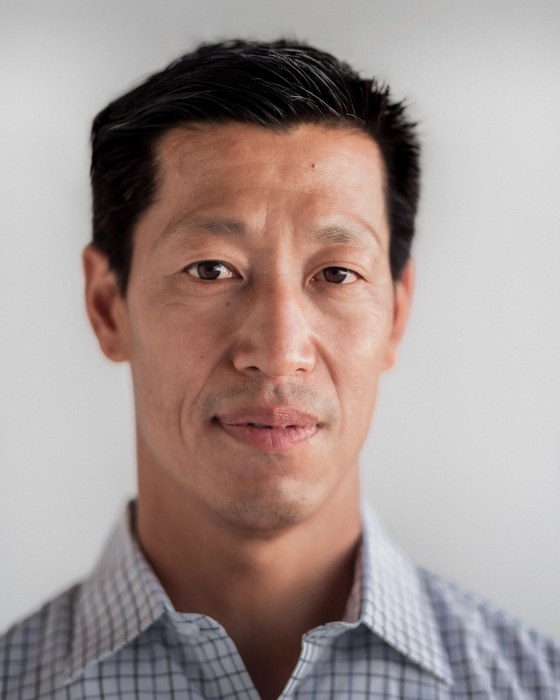
Hans Yang

Hans Yang

Founder and Managing Partner

Hans has spent his career on both sides of the table. He has founded and run companies and shipped products used by millions, and he has led digital transformation for the Fortune 500 from the consulting side. How OutsideSet works comes straight out of that combination.

  • Boston Consulting Group · Partner, digital transformation for Fortune 500 clients; corporate venture, 10+ companies from concept to Series A
  • Microsoft · VP, Startups; $1B+ revenue motion across a 600-person organization
  • Zynga · Studio Head; founded the LA studio, $100M run rate, 48M users
  • Luxe Valet · COO; acquired by Volvo
  • MIT, BS Engineering · UCLA Anderson, MBA
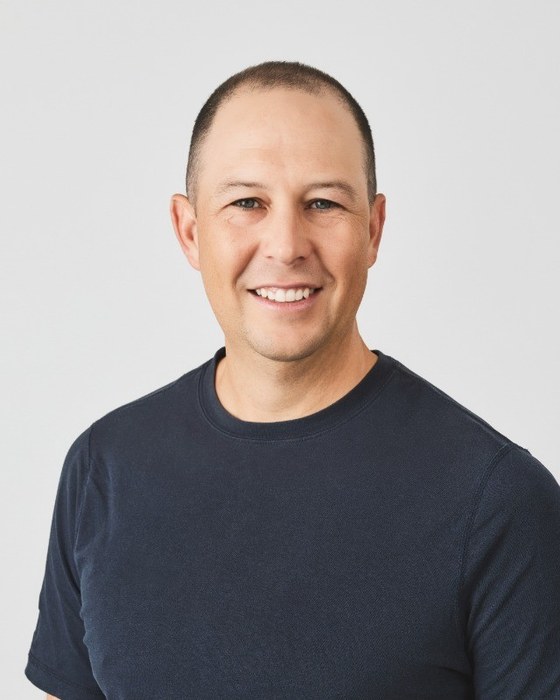
Bill Allred

Bill Allred

Partner

Bill is a product executive and applied AI operator with experience building software products from whiteboard idea through acquisition. He now helps companies identify valuable AI opportunities, build working solutions, and integrate them into everyday operations.

  • Zynga · helped scale Words With Friends from 2M to 14M daily active users
  • Within · built and launched Supernatural; acquired by Meta
  • Rally Health · led the mobile product team through its acquisition by UnitedHealth Group
  • VP Product · redesigned product development around AI-generated working prototypes, cutting cycle time by 70%
  • MIT Sloan, MBA

Behind the partners, a vetted bench. For every engagement we assemble a small team of senior practitioners: strategists, engineers, and domain specialists matched to the work at hand. You get the right expertise at the right moment, without paying for a large firm’s idle capacity.

Work with us

Start with a conversation.

Tell us where you are and what you’re trying to solve. If there’s a fit, we’ll propose a scoped diagnostic with a fixed price. If there isn’t, we’ll tell you that too.

Prefer to just grab time?
Book 30 minutes →

hans@outsideset.ai

We reply within one business day. What you send stays between us.